Seeking Serenity in a Patch of California Land
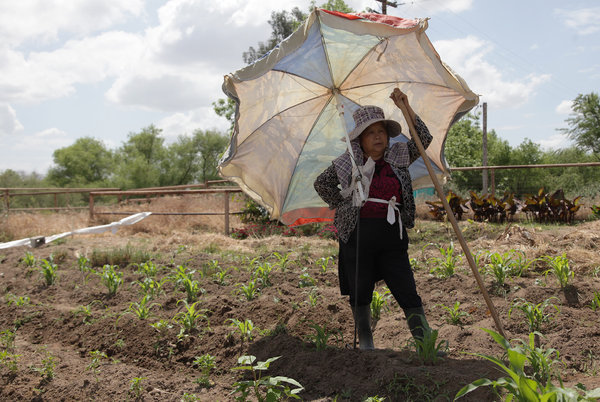
FRESNO, Calif. — Like Scotch broom and dandelions, despair can be invasive. This is why, every Monday, Lee Lee, a Hmong refugee, puts on her sun hat and flip-flops, grabs the hoe handmade by her father and brother in Laos and heads to the Hmong Village Community Garden here, where she tends rows of purple lemon grass, bitter melon and medicinal herbs along with other Hmong women.
“It lightens the load,” said Ms. Lee, whose depression has led her to think about suicide. “It brings peace, so I do not forget who I am.”
The garden, on the scraggly outskirts of town, is one of seven in Fresno created for immigrants, refugees and residents of impoverished neighborhoods with mental health money from the state. At the Slavic Community Garden, Ukrainian refugees persecuted for their religious beliefs in the Soviet Union now grow black currants for jam, dill for pickles and soups, and medicinal calendula flowers from Ukrainian seeds.
The thinking of community leaders and health professionals is that gardens can help foster resiliency and a sense of purpose for refugees, especially older ones, who are often isolated by language and poverty and experiencing depression and post-traumatic stress. Immigrant families often struggle to meet insurance co-payments, and culturally attuned therapists are in short supply.
The budget, about $171,000 a year for construction and maintenance of the community gardens and adjoining meeting spaces here, is made possible by the California Mental Health Services Act of 2004, which put a 1 percent tax on personal income of $1 million a year or more.
Spending state money this way has been controversial, with some advocates for those with mental illnesss arguing that gardens are an unaffordable frill in an era of diminishing resources. From 1995 to 2008, the state cut $700 million a year in core mental health services like psychiatric facilities.
“Should they be a priority when there is no evidence of how many seriously mentally ill are served?” asked Curtis A. Thornton, a member of the Fresno County Mental Health Advisory Board.
read more at http://www.nytimes.com/2013/05/26/us/in-california-gardening-for-mental-health.html?_r=0
 Urban Soul Farmer
Leave a comment